Surf training pathway

Train the decision first, then the manoeuvre.

Our coaching programme develops technique alongside ocean awareness. Every level has clear objectives, from stable take-offs and board control to advanced line choice, speed management and competition-specific decision-making.

Beginner foundationsIntermediate progressionAdvanced performance
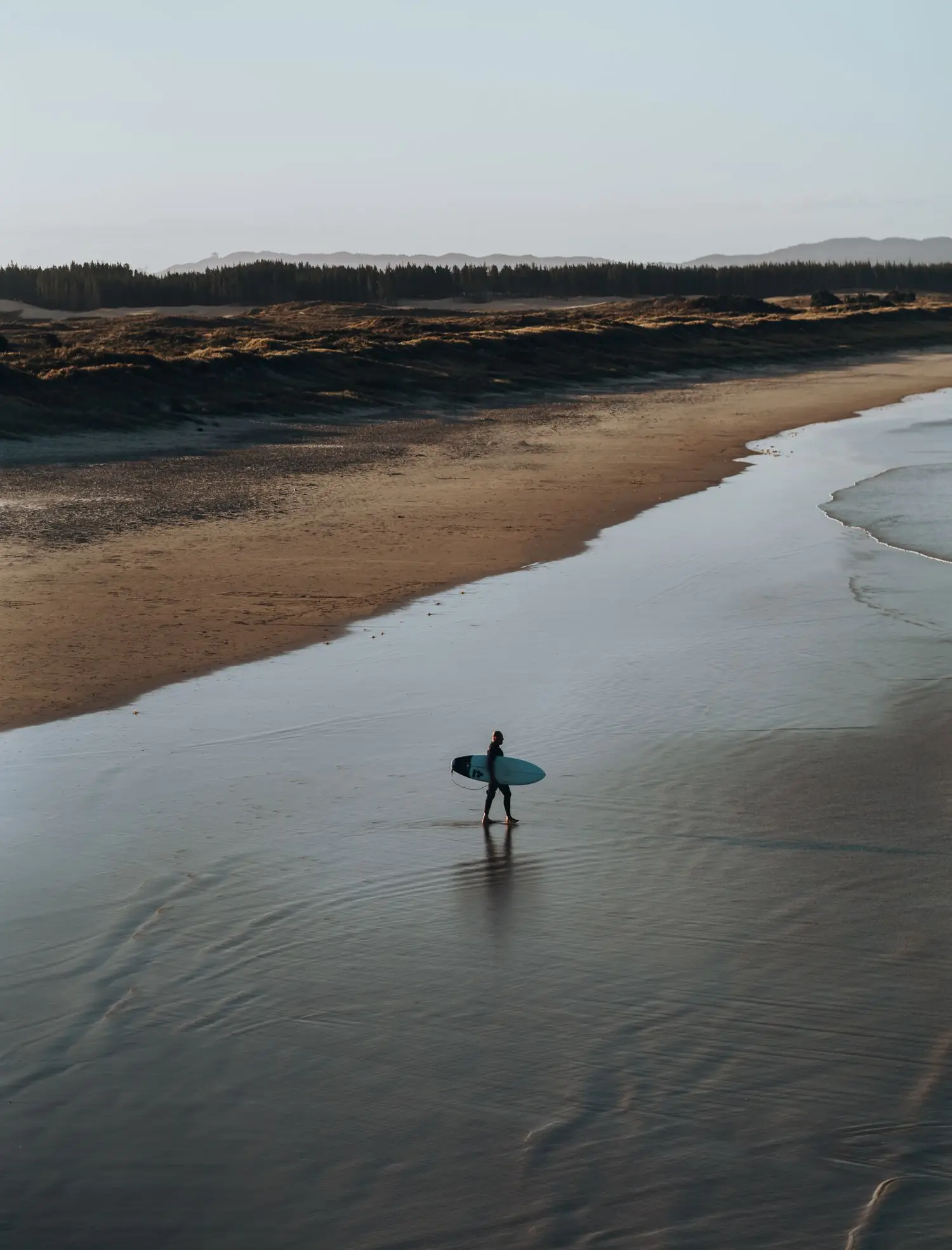
Surfer walking along a quiet New Zealand shoreline with a surfboard
SESSION PRINCIPLE

One clear objective per set creates better learning than trying to change everything at once.

Three levels

A progression system with visible next steps.

Ability is assessed by control and decision-making rather than how long someone has surfed. Members can move between levels as their independence, wave choice and technical consistency improve.

01

Foundation

For new surfers and those rebuilding fundamentals. Sessions develop efficient paddling, stable pop-up mechanics, trim, directional control and safe positioning around other surfers.

  • Board handling and paddling efficiency
  • Take-off timing and stance stability
  • White-water control before unbroken waves
  • Basic lineup etiquette and wave selection

02

Progression

For surfers regularly catching unbroken waves who want better speed, positioning and consistency. Coaching connects line choice with bottom-turn shape and section reading.

  • Angle of entry and take-off direction
  • Generating and preserving speed
  • Bottom turns and controlled redirection
  • Reading sections before committing
03

Performance

For confident surfers refining advanced surfing or preparing for heats. The work becomes more tactical, with emphasis on completion rate, variation and decision quality under pressure.

  • Critical positioning and late decisions
  • Rail transitions and power placement
  • Linking manoeuvres through changing sections
  • Heat strategy and score construction
Ocean awareness

Good surfing starts before the wave reaches you.

Members learn a repeatable observation routine before entering the water. Rather than treating conditions as background, we use them as part of the training objective.

  • Set pattern: identify spacing, direction and whether larger sets are shifting the peak.
  • Entry and exit: choose routes that reduce unnecessary paddling and keep the session organised.
  • Bank shape: notice where waves stand up, run, soften or close, then adapt take-off position.
  • Wind and tide: understand how changing texture and depth alter wave speed and section quality.

“A surfer who reads the next thirty seconds well often looks technically faster because they arrive in the right place.”

Coastal point and breaking waves under an overcast sky
Session structure

What a coached session actually looks like.

Coaching stays practical. The group receives a short plan, spends the majority of the session surfing and finishes with a focused review that identifies the next useful priority.

1

Read the conditions

Coach and surfers identify the likely take-off zone, useful reference points, current movement and the best objective for the available waves.

2

Set one technical focus

Each surfer receives a manageable cue such as “stay compressed through the first turn” or “look to the exit before redirecting”.

3

Surf with observation

The coach tracks wave choice, positioning, completion and whether the selected cue changes the outcome. Feedback is short enough to apply on the next opportunity.

4

Review and reset

The session ends with two questions: what became more repeatable, and what deserves attention next time? This keeps progress measurable without overloading the surfer.

Technique library

The core skills we revisit across levels.

P

Paddling

Body alignment, stroke rhythm, acceleration and choosing when to spend energy.

W

Wave selection

Recognising shape, entry angle, likely open face and when leaving a wave is the smarter choice.

R

Rail control

Using compression, rotation and pressure to set a line rather than forcing the board through a turn.

L

Linking sections

Balancing speed, timing and manoeuvre choice so one turn creates the setup for the next.

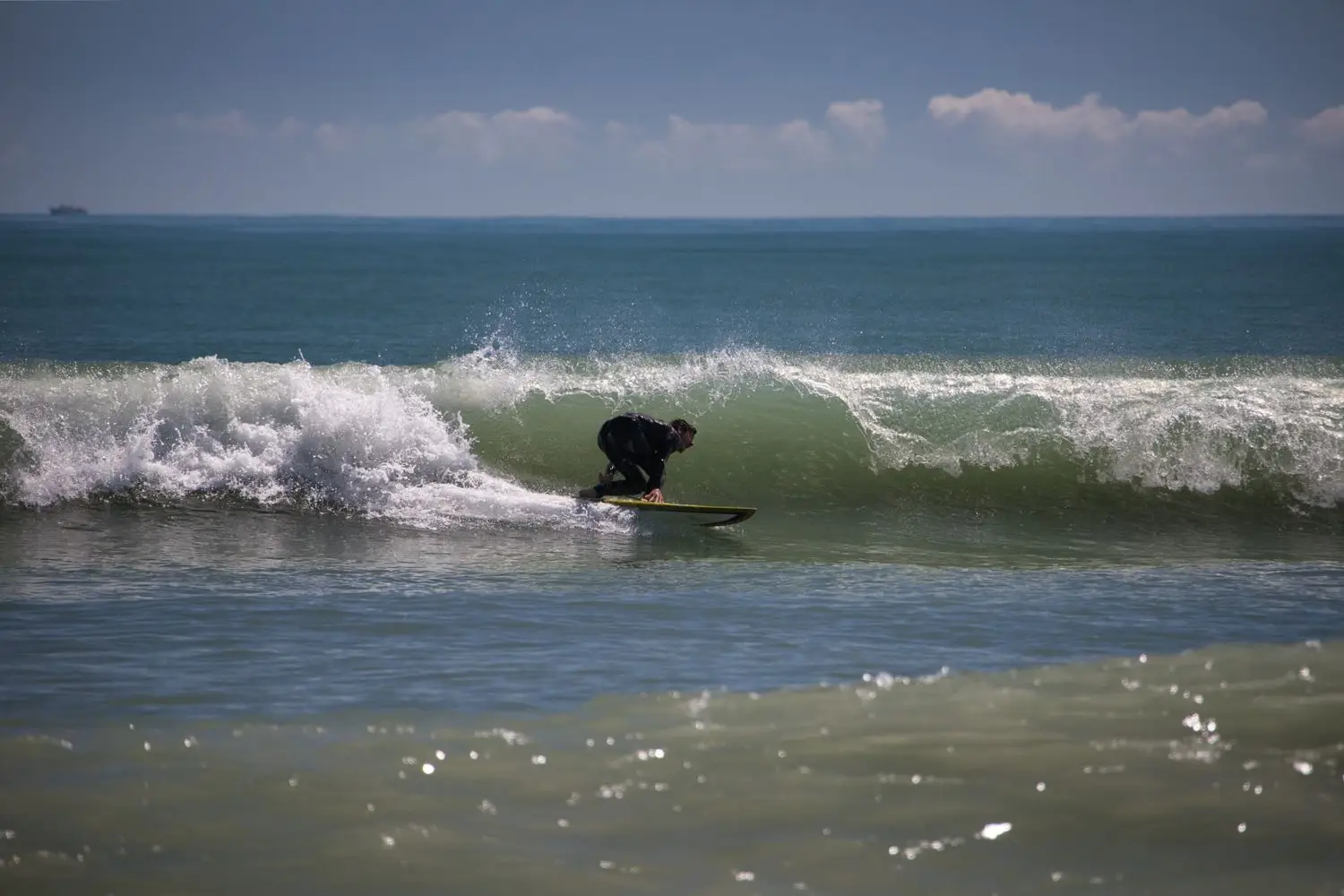
Surfer travelling through a clean breaking wave
What to bring

Arrive ready to spend the session surfing.

Bring a board you can control confidently for your current level, a secure leash, suitable surf wear for the conditions, water, sun protection and any personal equipment you normally use for a coastal session. If you are unsure about board choice, ask before the session so the coaching objective and equipment are aligned.

Please arrive early enough for the shore briefing. Late entry can mean missing the condition read and the technical cue that shapes the rest of the session.

Training FAQ

Practical questions before you start.

Do I need competition experience to join training?

No. Club training serves both recreational and competition-focused surfers. Competition content is introduced only when it supports your goals and current level.

How is my training level decided?

We look at paddling independence, take-off consistency, board control, wave selection and how comfortably you manage a normal lineup. Time spent surfing is useful context, but it is not the deciding factor.

What happens when conditions are unsuitable for the planned objective?

The session plan changes. Coaching may shift toward positioning, paddling efficiency, wave reading or another skill that suits the available surf. The goal is productive water time, not forcing a plan onto the wrong conditions.

Can experienced surfers book a focused assessment?

Yes. A focused assessment can identify where decision-making or technique is limiting consistency and can be used to set priorities before joining ongoing club training.

Choose a clear next step for your surfing.

Tell us your current level, the waves you normally surf and the skill you most want to improve. The club team can suggest the most suitable training route.